In May 1977 in the depths of a PDP-10, at that time a state-of-the-art computer residing in the MIT basement, the Zork program was started for the very first time. A hobbyist project of Tim Anderson, Marc Blank, Bruce Daniels, and Dave Lebling.
In DnD, a role-playing game, a group of people gather around a table to listen and play out fantasy adventures told and guided by a skilled Dungeon Master. The DM paints a picture for adventurers as they progress throughout the imagined world. Nothing but words and occasional props to experience breathtaking adventures. Zork was one of the first where that human role of Dungeon Master was replaced by a machine. It painted you a picture and accepted text commands to progress you through, while you were solving puzzles and living experiences as you went - you and a sassy machine on an adventure together.
Back in the day a PDP-10 computer was available for not only our Zork creators but also other researchers without much trouble via ARPANET - a very crude version of what became the Internet we know today. They found Zork and it quickly gained traction, respect of the peers, and a loyal fanbase by word-of-mouth. That enthusiasm pushed its creators to develop it further with new environments, adventures, systems, and objects till 1979 when it maxed out its 1MB memory allocation on the mainframe.
Zork I's creation coincided with the popularization of the first personal computers such as Apple II, eventually becoming a bestseller with 360,000 copies sold worldwide until it was bought by Activision in 1986 (yeah, Activision is that old).
Zork was revolutionary on multiple levels, being one of the prime examples of how rich and engaging a world a computer can simulate, or rather, how closely a computer can simulate a human on the level of experiences and emotions it triggers within us while interacting with it. Zork's world, however engaging, was 100% handcrafted. A digital diorama written down line by line where each imaginary rock, tree, or puzzle was deliberately placed by its creators and each cynical response written down beforehand. Its outcomes were deterministic and not branching - finish it once and all replays will just repeat the experience.
Success like that doesn't go unnoticed - their inevitable outcome is a flow of cash from excited investors that propels following projects and their technology exponentially into more or less successful directions. One of them was embedding algorithmic systems into the digital experiences such as procedural world generation, collisions, pathfinding, or flocking. Even though the outcome of multiple algorithms interacting with each other is still deterministic, the amount of possible outcomes goes to infinity. That substantially improved the experience as well as replayability of created titles. Some, such as Dwarf Fortress, taking it to near extremes - you manage and develop your colony of dwarfs and each object you interact with has history richer than most of the post-USSR countries. All in ASCII.
Both Zork and Dwarf Fortress excelled in one area while being pretty imperfect in others, but those were becoming less and less noticeable as technology, compute, and hardware grew to the point of reaching titles like Mass Effect or The Witcher where when stars align, you are tired enough or don't care enough and the game is good enough, for a glimpse, a brief moment in time you can immerse yourself in the adventure until it feels real. Excitement, curiosity, sadness, all the emotions you feel deep within you making it an experience worthy of reality. Mine was Sea of Thieves somewhere during Covid. A moment shared with friends on the deck of a ship. Shanties, rum, and the vastness of the sea. A perfect sunset over an island on the horizon. Adventure filled with emotions. I knew in the moment it was just a game, a collection of algorithms and approximations, but it felt as real as anything else and one I fondly recall to this day.
What I came to understand from it was that the knowledge of inner workings of it only adds to the excitement and mystery and awe. Knowing how my adventure works didn't make it less enjoyable, maybe even more.
Being around various different applications of Machine Learning over the years, I've lived with a conviction that it's an interesting concept, however no different than other algorithms developed over the times. Code is a force multiplier. Using it for things like detecting cats from dogs was just a force multiplier to problems too complex to be bound by declarative algorithms. Problems where explicit rules for solving them were either unknown or infeasible so we derive patterns from vast amounts of data instead and the output is just good enough to make a difference.
I watched this area of research grow alongside me from those simple solutions, through BERT, GPT-2, 3 to what it is today with an unwavering conviction that all of those great scientific breakthroughs and technological advancements made along the way won't matter that much, and while useful, it's still only a statistical pattern-matching machine, just bigger and harder to comprehend.
ChatGPT Is a Blurry JPEG of the Web
I loved this piece and subscribed to the metaphor of it being nothing else but a blurred image of the web. I referenced it a lot to people asking me about AI. I understand now that its impact on our lives will be vastly greater than I have ever dreamed of.
Starting with Zork, over time we manufactured an adventure where at times you cannot tell it from the "real" thing. Heart rate. Adrenaline. Excitement. Memories. Starting with GPT we will over time manufacture artificial intelligence where we won't be able to tell it from "our" natural intelligence. Whether we achieve actual AGI may be irrelevant; the line will fade day by day to the point where we either won't care or won't notice it's here. In some areas where reward functions guided the current SOTA models to excel, it already has.
What was eluding me is the fact that my smart white collar job is largely based on my wetware matching patterns on a daily basis already. No reason for an artificial pattern-matching machine to do a worse job of it. And while the brain and its inner workings are still largely a mystery, there is no reason to believe that, at its core, it doesn't follow some primitive physics principles that we can recreate. So far in the history of humanity there weren't problems that we couldn't get to the bottom of using physics, just problems we didn't solve yet.
The most prominent argument for current LLMs being incapable of reaching AGI - they operate within bounds of knowledge derived from already discovered and found solutions by the collective of humankind, which makes their work not original, but rather derivative from what was already produced, seen, and experienced. But when's the last time you had an original thought? What I am doing, writing, thinking of is already a derivative of what I've seen and experienced and even if I stumble upon an idea that feels original to me, a quick lookup grounds me back in reality.
The knowledge of inner workings of it only adds to the excitement and mystery and awe. - That part of this essay about knowing how things work making it a better experience? Yeah, Feynman reached this conclusion before I was even born.
'I have a friend who's an artist and he's sometimes taken a view which I don't agree with very well. He'll hold up a flower and say, "look how beautiful it is," and I'll agree, I think. And he says, "you see, I as an artist can see how beautiful this is, but you as a scientist, oh, take this all apart and it becomes a dull thing." And I think he's kind of nutty. First of all, the beauty that he sees is available to other people and to me, too, I believe, although I might not be quite as refined aesthetically as he is. But I can appreciate the beauty of a flower. At the same time, I see much more about the flower that he sees. I could imagine the cells in there, the complicated actions inside which also have a beauty. I mean, it's not just beauty at this dimension of one centimeter: there is also beauty at a smaller dimension, the inner structure... also the processes. The fact that the colors in the flower are evolved in order to attract insects to pollinate it is interesting - it means that insects can see the color. It adds a question - does this aesthetic sense also exist in the lower forms that are... why is it aesthetic, all kinds of interesting questions which a science knowledge only adds to the excitement and mystery and the awe of a flower. It only adds. I don't understand how it subtracts.'
On the scale of humankind there are not that many purely original thoughts as one would think; everything is derived from first principles. I don't even know if over the course of my life I had at least one of such kind. I am closer to a pattern-matching machine than I would like to admit, distilling interpolated thoughts into derived ideas and beliefs.
I love that intelligence is finally so sought after. Smart and extremely sharp in their respective field is the new sexy and I could not be happier for those people. But we, as a majority, me included, are not one of them. That magical 0.1% of population blessed with what could be considered an original thought is now worth x1000 more than what I will be worth if we compare raw analytical capabilities. Being in the middle of the bell curve sucks, not dumb enough to not care and not smart enough to stay relevant in the long run. I will adapt and use AI in my daily work. At some point I will work with it hand in hand. Maybe a decade or two down the road AI will use me in its daily work. Until I am no longer needed in the cycle.
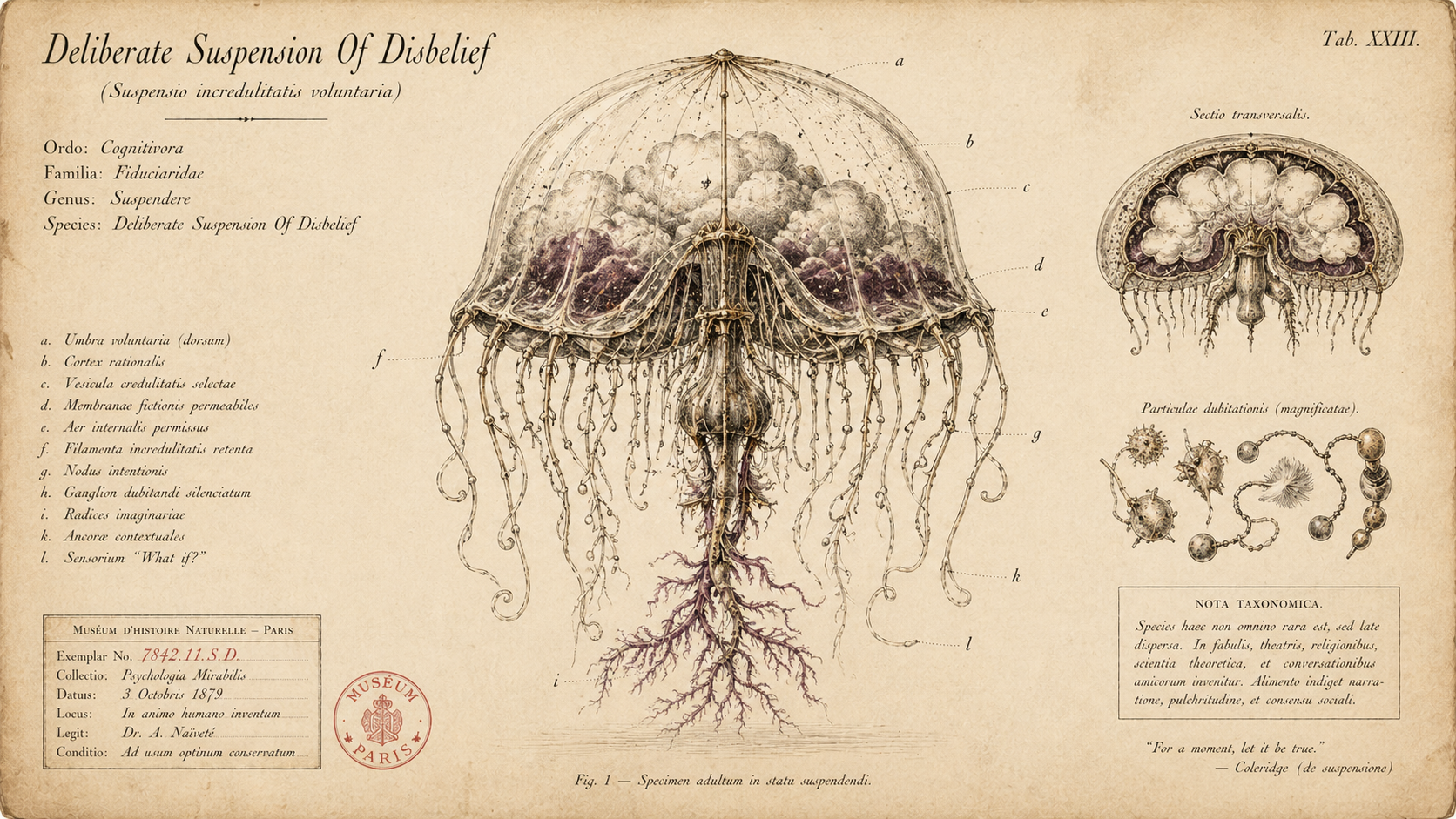
It was eating me from inside for a while - where working every day to replace myself will lead me. Without a comfortable white collar cushion. Whether the endgame is one of those rare utopian scenarios or what I am more inclined to believe, a dystopian one. I don't anymore; my wetware implemented in goo found a way out. I choose to live in deliberate suspension of disbelief to wake up in the morning and not hang myself.
When the day comes - and it will come - I hope to be okay with myself retreating into the safety net of family and familiar faces, becoming just another irrelevant data point in the crowd. And yet, I remain deeply, genuinely glad that I live in an era where I can witness the greatest civilizational progress, the defining turning point of our age, unfolding in real time - changes so vast and irreversible that simply being here to see them feels extraordinary, even if their final outcome isn't favourable for me.
Deliberate suspension of disbelief while in awe of technological advancements is the only logical way forward.
Back to blog